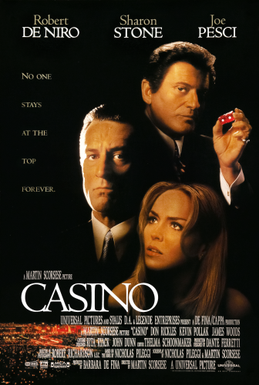
Gangster Film Casino: Greed, Power, and the Vegas Downfall of an Era
When the shimmering lights of Las Vegas beckon, they often promise dreams of wealth and power, but behind the opulent façade, a darker reality frequently lurks. No film captures this intoxicating blend of allure and danger quite like Martin Scorsese's epic Casino. Released in 1995, this quintessential gangster film delves deep into the mob's intricate control of the city's gambling mecca, painting a sprawling portrait of ambition, loyalty, and inevitable betrayal. Often celebrated as the definitive gangsterfilm uit 1995, it stars an iconic trio: Robert De Niro as the calculating Sam "Ace" Rothstein, Sharon Stone as the volatile Ginger McKenna, and Joe Pesci as the explosively violent Nicky Santoro.
More than just a crime drama, Casino is a historical document, chronicling the final, chaotic years of mob dominance in Las Vegas before corporate interests took over. Scorsese, known for his unflinching portrayals of the criminal underworld, reunites his dream team to deliver a narrative brimming with lavish excess, brutal violence, and profound human flaws. From the initial high of unimaginable wealth to the bitter taste of ruin, the film explores the universal truth that "No one stays at the top forever."
The Rise and Fall of Sam "Ace" Rothstein: A High-Stakes Game
At the heart of this compelling gangsterfilm uit 1995 is Sam "Ace" Rothstein, a character masterfully brought to life by Robert De Niro. Ace isn't your typical mobster; he's a mathematical genius with an uncanny ability to predict outcomes and manage the intricacies of a high-stakes casino. His ascent begins when the mob, impressed by his unparalleled gambling methods and knack for generating profit, dispatches him to Las Vegas to oversee the Tangiers Casino. Ace's role is unique: he's not a made man, but a trusted "earner" whose sole purpose is to skim profits for his unseen benefactors.
Initially, Ace's disciplined approach and meticulous attention to detail bring unprecedented success. He runs the casino with an iron fist, ensuring every dollar is accounted for and every cheat is caught. His voiceover narration, cool and analytical, pulls the audience into the complex machinery of mob-run Vegas, revealing the hidden layers of operations, from counting rooms to pit bosses. However, Ace’s fatal flaw lies not in his intelligence, but in his burgeoning ambition and his attempts to legitimize a world built on illegitimacy. He craves recognition and a life beyond the shadows, a desire that ultimately puts him on a collision course with the very forces that put him in power.
His story serves as a potent exploration of how even the most brilliant minds can be undone by the destructive forces of unchecked greed and misguided loyalty. The more Ace tries to control his environment, the more it spirals out of his grasp, proving that in the mob's world, control is always an illusion.
The Destructive Trio: Nicky, Ginger, and the Seeds of Downfall
While Ace strives for order, two other pivotal characters inject chaos into his meticulously constructed world: Nicky Santoro and Ginger McKenna.
Nicky Santoro: The Embodiment of Mob Violence
Nicky Santoro, portrayed with chilling intensity by Joe Pesci, is Ace's childhood friend and polar opposite. Where Ace is meticulous, Nicky is impulsive; where Ace seeks control through numbers, Nicky wields power through brutal intimidation. The mob sends Nicky to Vegas to protect Ace and their interests, but Nicky's insatiable appetite for violence and his disdain for rules quickly lead him down a path of independent criminality. He sets up his own crew, engaging in shakedowns, burglaries, and increasingly gruesome acts of violence that draw unwanted federal attention. Nicky's uncontrolled rage and escalating body count not only threaten the mob's legitimate casino operations but also jeopardize Ace's tenuous position. Their friendship, once a bond of brotherhood, devolves into a desperate power struggle, highlighting the inherent danger of mixing personal loyalty with criminal enterprise.
Ginger McKenna: The Ultimate Femme Fatale
Sharon Stone's portrayal of Ginger McKenna is nothing short of mesmerizing and tragic. Ginger is a beautiful, cunning street hustler who captivates Ace. Despite his better judgment and warnings from those around him, Ace falls deeply in love with her and marries her. However, Ginger is a woman forever entangled with her past, particularly her manipulative ex-boyfriend, Lester Diamond (James Woods). Her love for Ace is constantly at war with her addiction to money, drugs, and the dangerous thrill of her former life. Her inability to escape Lester's influence and her growing resentment of Ace's attempts to control her lead to a downward spiral of infidelity, substance abuse, and desperate schemes to steal Ace's money.
Ginger's tragic arc is a powerful commentary on how personal relationships can become a volatile ingredient in a world built on illicit gains. Her character underscores the film's central theme: that the pursuit of greed often leads to ultimate destruction, not just for the mobsters but for everyone caught in their orbit. The marriage, as the narrative explicitly states, "he had better not done," becomes a central catalyst for Ace's eventual downfall, proving that even a man of his intellect can be blinded by love and lust, making disastrous choices that echo through every facet of his life.
Scorsese's Masterclass: Directing a Vegas Epic
Martin Scorsese's signature style is on full display in Casino, cementing its status as a timeless and essential gangsterfilm uit 1995. The film is a technical marvel, with dynamic camera work, rapid-fire editing, and a rich, eclectic soundtrack that perfectly captures the changing moods of the story. Scorsese uses voiceover narration from both Ace and Nicky to provide dual perspectives, offering intimate insights into their thoughts, motivations, and the complex mechanics of their world. This narrative technique, familiar from films like Goodfellas, allows for an encyclopedic detail that immerses the audience completely.
The visual storytelling is breathtaking, transitioning from the dazzling neon lights and extravagant costumes of the casino floor to the stark, brutal realities of the desert landscape where bodies are disposed of. Every frame is meticulously crafted, showcasing the excess and glamour that defined mob-era Vegas while simultaneously exposing the ugly underbelly of violence and corruption. For a deeper dive into how Scorsese crafts such narratives, you might find valuable insights in Casino: Why Martin Scorsese's 1995 Classic Defines the Genre.
Key Cinematic Elements:
- Epic Scale: Spanning decades, the film captures the full spectrum of mob influence, from its zenith to its inevitable decline.
- Unflinching Violence: The brutality is graphic and frequent, serving not as gratuitous spectacle but as a stark reminder of the harsh consequences and the primal nature of the criminal world.
- Costume Design: The elaborate wardrobe, particularly Ace's multitude of vibrant suits and Ginger's dazzling gowns, reflects the opulence and flamboyance of the era.
- Soundtrack: A carefully curated selection of classic rock, pop, and blues songs provides a vivid auditory backdrop, enhancing the film's emotional impact.
Scorsese masterfully balances the intoxicating allure of wealth and power with the grim reality of violence and betrayal, crafting a narrative that is both thrilling and profoundly tragic.
Lessons from the Downfall: The End of an Era
Casino is more than just a crime story; it's a poignant elegy for a bygone era. The film meticulously details the intricate system of skimming profits, bribing officials, and maintaining order through intimidation that characterized mob-run Las Vegas. However, it also illustrates the internal and external pressures that led to its collapse. The mob's own hubris, exemplified by Nicky's uncontrolled violence and Ace's personal failings, coupled with increased federal scrutiny and the rise of corporate interests, signaled the end of their reign.
The practical takeaway from this cinematic masterpiece is an unflinching look at the consequences of unchecked ambition and the corrosive nature of greed. It demonstrates how:
- Loyalty has its limits: Even the strongest bonds can fray under the weight of self-interest and conflicting agendas.
- Control is an illusion: In a volatile environment like the mob's Vegas, every attempt to maintain order is eventually undermined by human flaws.
- The past always catches up: For characters like Ginger, escaping prior entanglements proves impossible, leading to a cycle of self-destruction.
- Every empire crumbles: Whether it's a personal kingdom built on gambling or a criminal organization, the pinnacle is often followed by a precipitous fall.
By showing the transformation of Vegas from a mob-controlled playground to a sanitized corporate enterprise, Casino offers a fascinating historical perspective on how power dynamics shift and how entire eras can come to an end, often with a bloody, dramatic flourish.
Conclusion
Martin Scorsese's Casino remains a towering achievement in cinematic storytelling and a landmark gangsterfilm uit 1995. Through its unforgettable characters, sprawling narrative, and stunning visuals, it transports viewers into the heart of a uniquely American saga—the rise and fall of mob rule in Las Vegas. It's a cautionary tale about the seduction of power, the corrupting influence of greed, and the ultimate fragility of even the most formidable empires. The tragic interplay between Sam "Ace" Rothstein, Nicky Santoro, and Ginger McKenna serves as a timeless reminder that no matter how high one climbs, the descent can be swift and brutal. The film’s enduring appeal lies in its unflinching honesty and its rich tapestry of human experience, solidifying its place as not just a great crime film, but a profound exploration of ambition, betrayal, and the ephemeral nature of control.